A joint research by the Ho Chi Minh National Academy of Politics — Mekong Development Research Institute (MDRI) — UNDP in Viet Nam, Q1/2026.
Since 1 July 2025, Vietnam has been transitioning from a three-tier to a two-tier local government model, aiming to streamline the state apparatus, reduce intermediate layers, and devolve greater authority to grassroots-level governments. As a result, many state management functions have been transferred to the commune level, requiring not only an administrative reorganisation but also a redesign of how public services are delivered and operated.
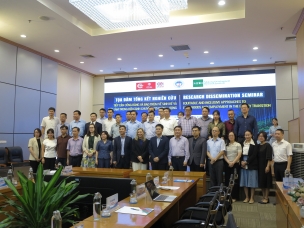
Against this backdrop, the Ho Chi Minh National Academy of Politics and the Mekong Development Research Institute (MDRI), with technical support from UNDP in Viet Nam, jointly conducted a rapid assessment titled “Public Service Delivery under Vietnam’s Two-Tier Local Government Model” in the first quarter of 2026.
Within this study, MDRI led the quantitative component, focusing on citizens’ perspectives during the operationalisation of the two-tier model. Through a nationwide telephone survey of 4,932 citizens, MDRI provides empirical evidence on people’s perceptions, access, and lived experiences regarding public and essential services. The analysis helps identify the enabling factors, bottlenecks, and access gaps that have emerged during this transitional period.
Key findings
- Citizens broadly support the policy of streamlining the state apparatus, reducing intermediate layers, and devolving authority to grassroots-level governments. However, direct interaction between citizens and commune-level authorities remains limited in the early phase of the transition.
- Transferring many functions to the commune level has positioned grassroots governments at the centre of the public service delivery chain. Yet new mandates have not always been matched by commensurate procedures, staffing, infrastructure, and resources.
- Some administrative procedures have become more convenient for citizens, while internal processing workflows within government may have grown more complex due to gaps in standardisation, inter-agency coordination, and detailed guidance.
- Civil servants at the grassroots level are under significant pressure to handle cross-sectoral, multidisciplinary tasks, while organisational structures, technical capacity, and coordination mechanisms remain works in progress.
- Digital transformation is a key enabler of more effective public services, but technology delivers its full value only when paired with interoperable data, synchronised processes, and inclusive design for diverse population groups.
- Essential public services such as health, education, and the environment indicate a need to shift focus from securing basic access toward enhancing quality, effectiveness, and inclusiveness.
Policy implications
The findings suggest that the success of the two-tier local government model lies not only in streamlining organisational structures, but in the system’s capacity to operate steadily, mobilise adequate resources, respond promptly, and place citizens at its centre.
Further reading
- VnExpress: Citizens support streamlining the state apparatus but remain dissatisfied with commune-level services (in Vietnamese)
- Nhan Dan: Improving the effectiveness of public service delivery under the two-tier local government model (in Vietnamese)
- Dan Tri: One commune with 49 staff serving over 66,000 residents; one office of 12 people doing the work of six departments (in Vietnamese)
- VnEconomy: Public services under two-tier government: Citizens still navigate “many doors” instead of a “one-stop shop” (in Vietnamese)
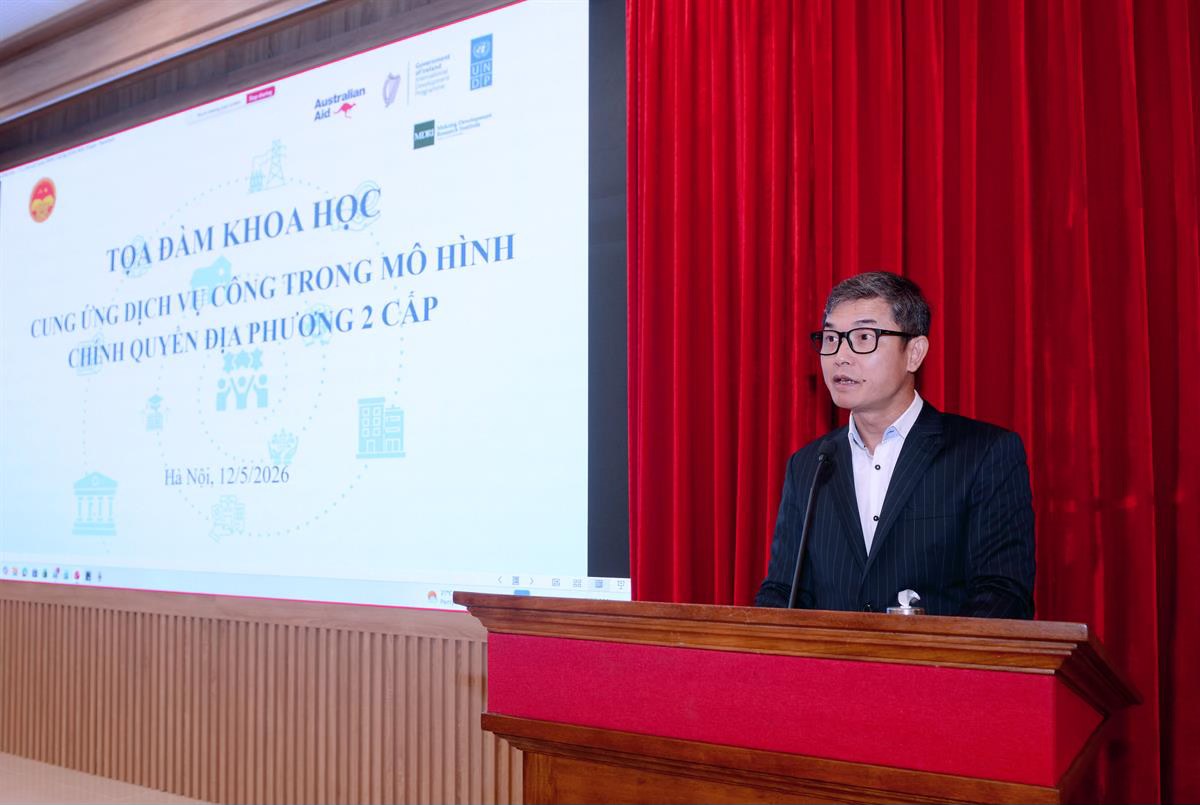
Photo: Dr. Phung Duc Tung – MDRI’s Director at the Scientific Workshop “Public Service Delivery in the Context of Two-tier Local Government Model” (sourced by Ho Chi Minh National Academy of Politics)