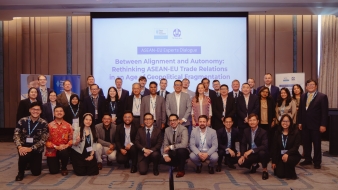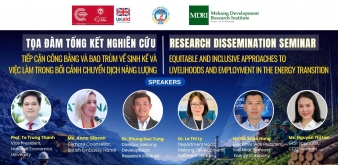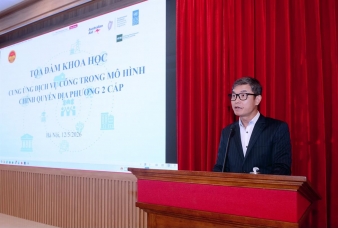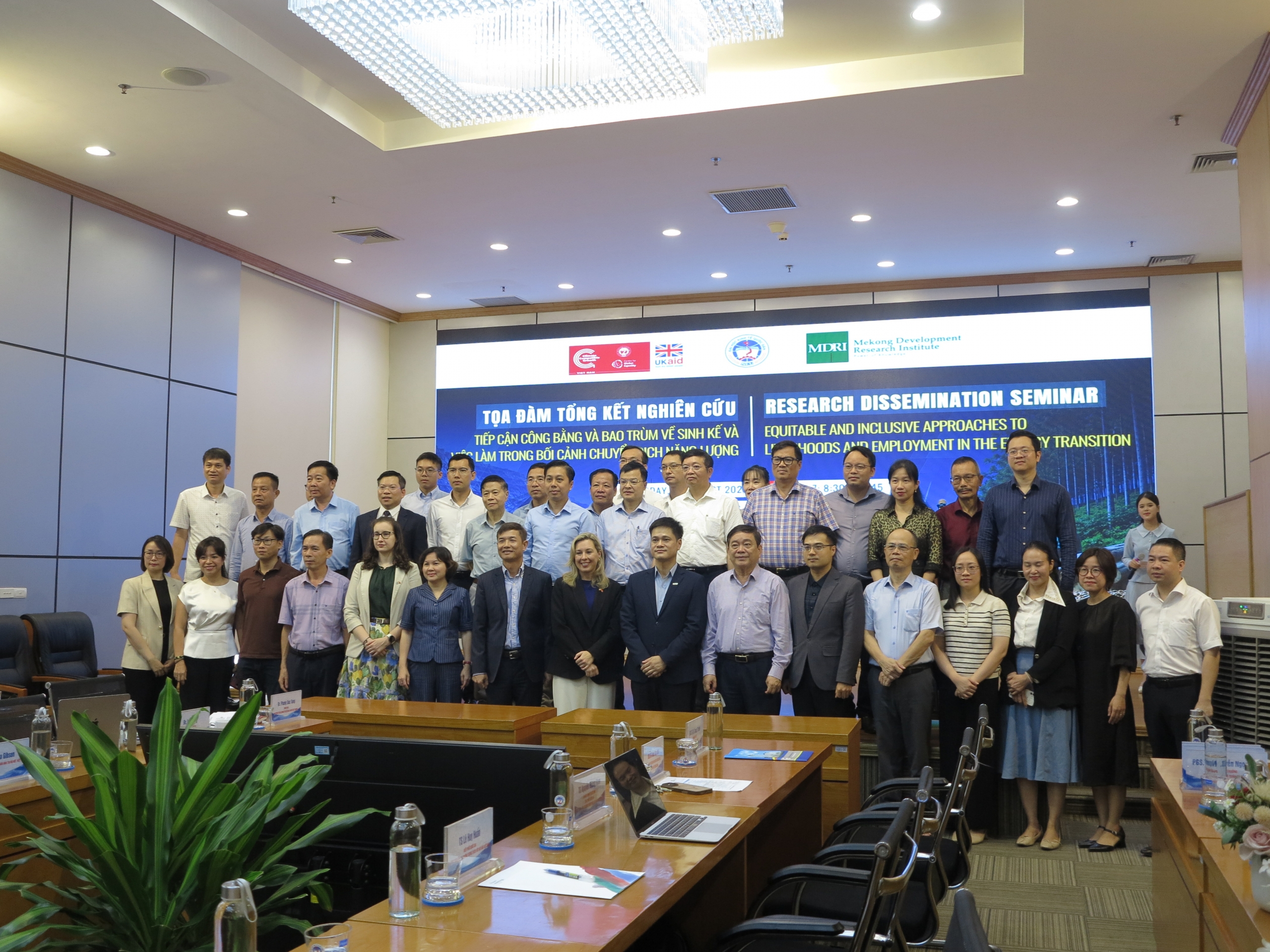
On 27 August 2026, the Vietnam CCG Network, in collaboration with the National Economics University (NEU) and the Mekong Development Research Institute (MDRI), organized a research dissemination seminar on equitable and inclusive approaches to livelihoods and employment in Viet Nam’s energy transition.
The seminar brought together agencies and departments under the Ministry of Industry and Trade and the Ministry of Home Affairs; the Delegation of the European Union to Vietnam; the British Embassy; representatives from the Quang Ninh Department of Home Affairs and Department of Education and Training; coal industry enterprises and trade unions; forestry and wood pellet manufacturing businesses; socio-political organizations; and educational institutions, universities, and research institutes from across the country.
The research team presented key findings on:
+ The livelihood and employment conditions of coal-sector workers in Quang Ninh and their capacity to adapt to the energy transition;
+ Alternative livelihood and employment pathways, including opportunities linked to the acacia and wood-pellet value chain;
+ Barriers to workers’ transition into emerging sectors, including skills, training access, income security, gender, and other structural factors; and
+ Policy options for a more equitable, inclusive, and sustainable transition.
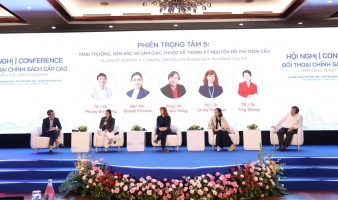
The presentations were followed by a panel discussion featuring perspectives from government, development partners, and the private sector. We thank our panelists for sharing their insights:
– Mr. Lê Mạnh Hùng from the Labor Policy Division of Quang Ninh Department of Home Affairs
– Mr. Cyril Loisel, from the Delegation of the European Union to Viet Nam
– Mr. Đỗ Xuân Hùng, Vice President of Vietnam-Japan Biomass Energy Joint Stock Company (VBE)
Discussions reinforced the importance of paying attention to whether affected workers can realistically access, adapt to, and benefit from emerging livelihood opportunities in ensuring a just transition. They also highlighted the institutional, financial, skills development, and social support needed to make these transitions feasible.
The seminar also featured a capacity-building session on integrating Gender Equality and Social Inclusion (GESI) into sustainable livelihood and employment development, led by Ms. Nguyễn Thị Lan, GESI Specialist at the Vietnam CCG Network.
We sincerely thank all participating government agencies, development partners, socio-political organizations, enterprises, workers’ representatives, and researchers for their valuable contributions. Their perspectives helped connect the research findings with the practical challenges and opportunities involved in advancing a just energy transition in Viet Nam.